
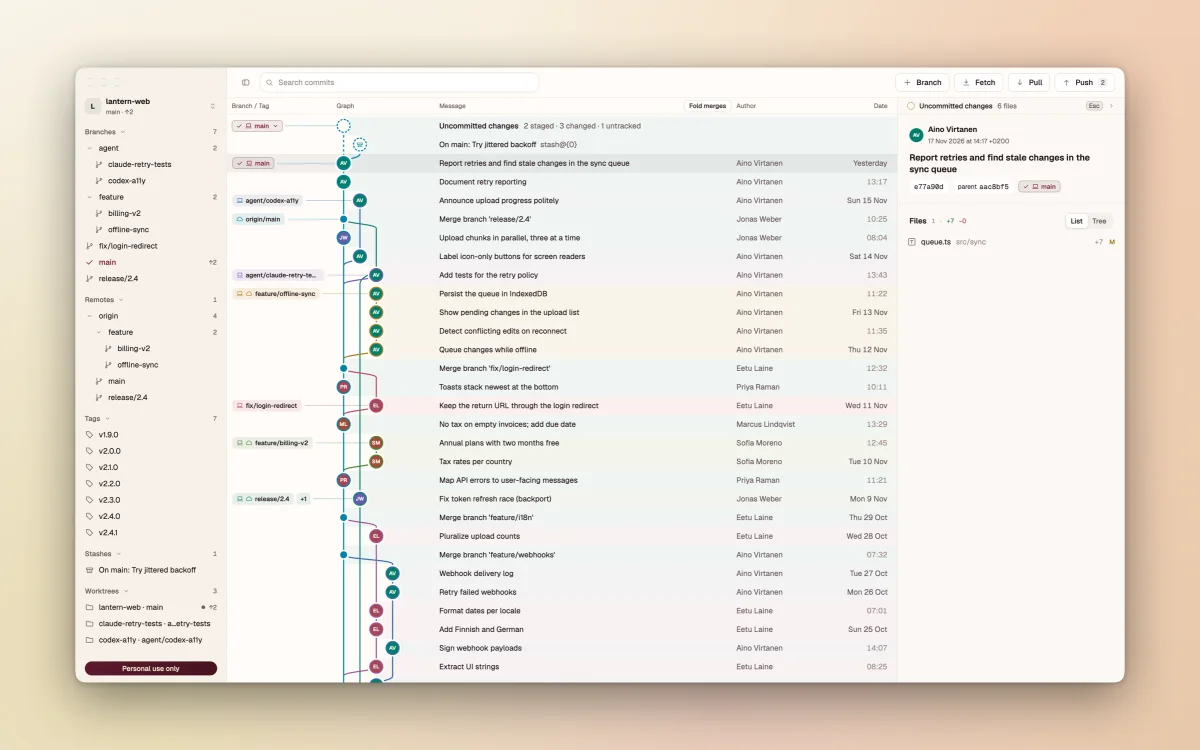
Commit graph
Branches, tags and stashes in one view, with uncommitted changes at the top. Search by message, author, SHA or path, or fold merges to follow the main line.

A Git client for Macs with Apple Silicon. It handles very large repositories, works without a network connection and has no account or telemetry. We made it for our own work and use it every day.
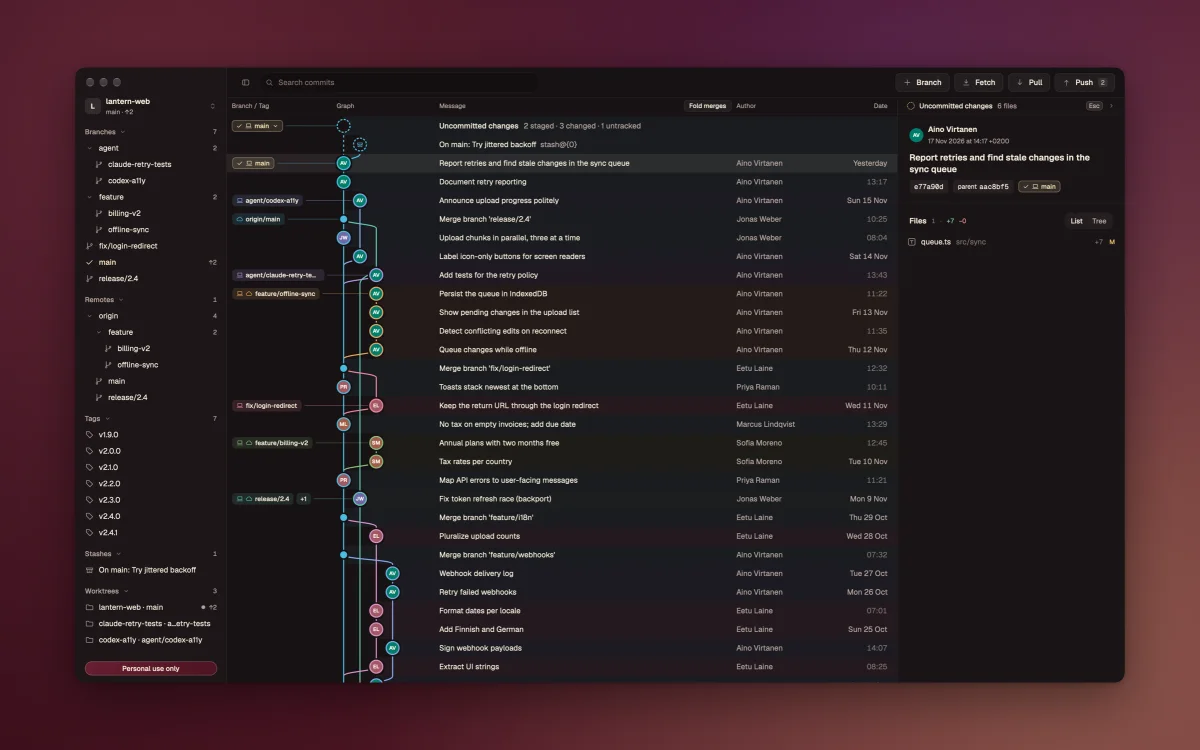
Branchery covers the Git work you do every day, and leaves the rest to the command line.
Branches, tags and stashes in one view, with uncommitted changes at the top. Search by message, author, SHA or path, or fold merges to follow the main line.
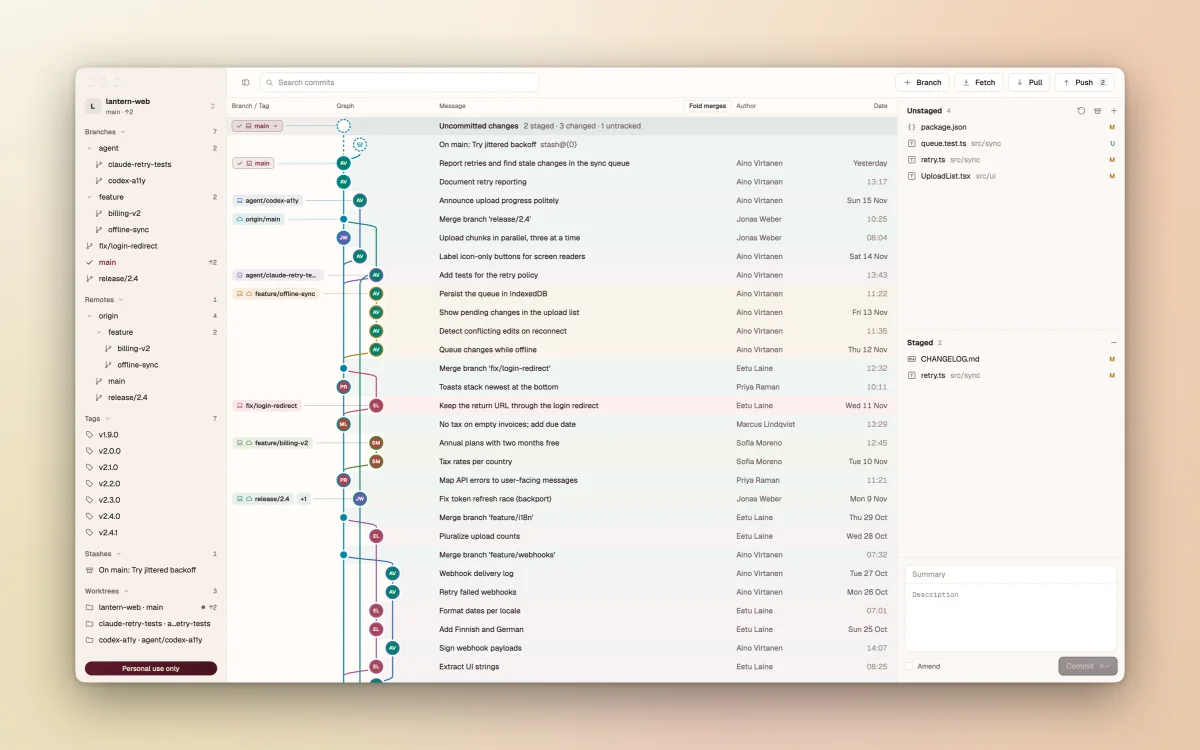
Stage and unstage whole files, hunks or single lines, then commit or amend. Signed commits are supported.
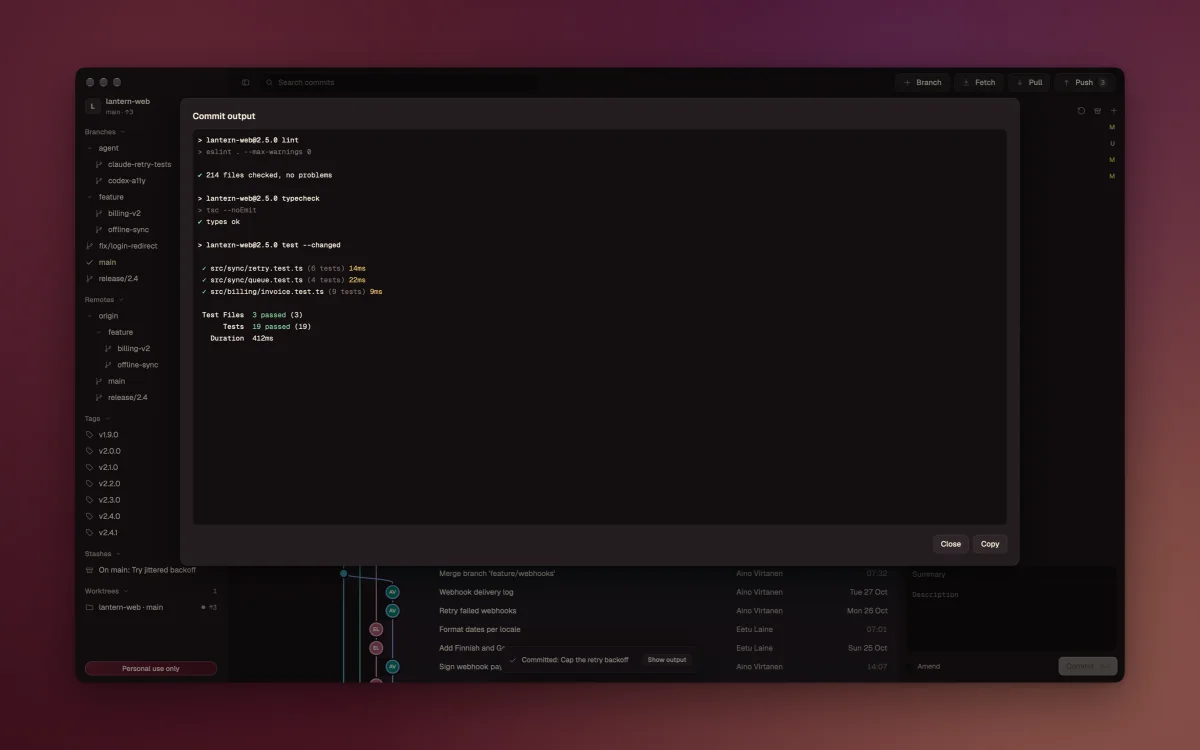
Output from Git and your commit hooks is shown as it runs, with its colours. If a hook fails, the commit box says why.
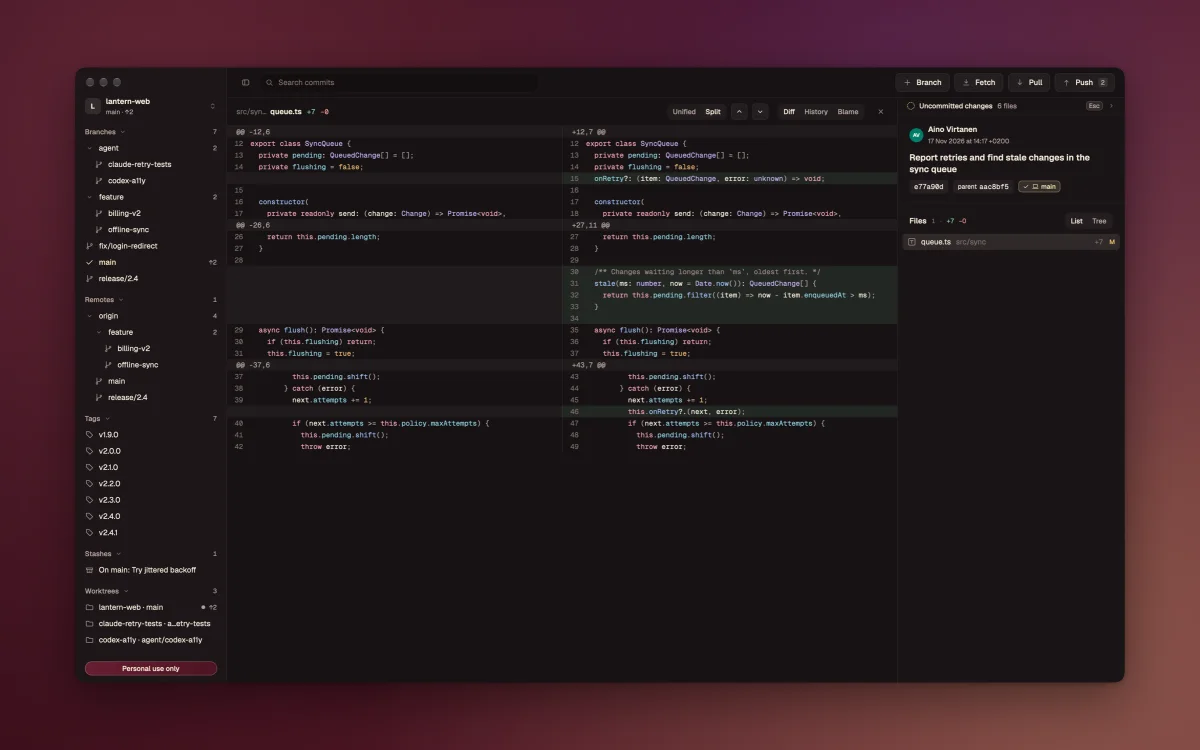
Unified or side-by-side diffs with syntax highlighting. Every file also has its history and blame.
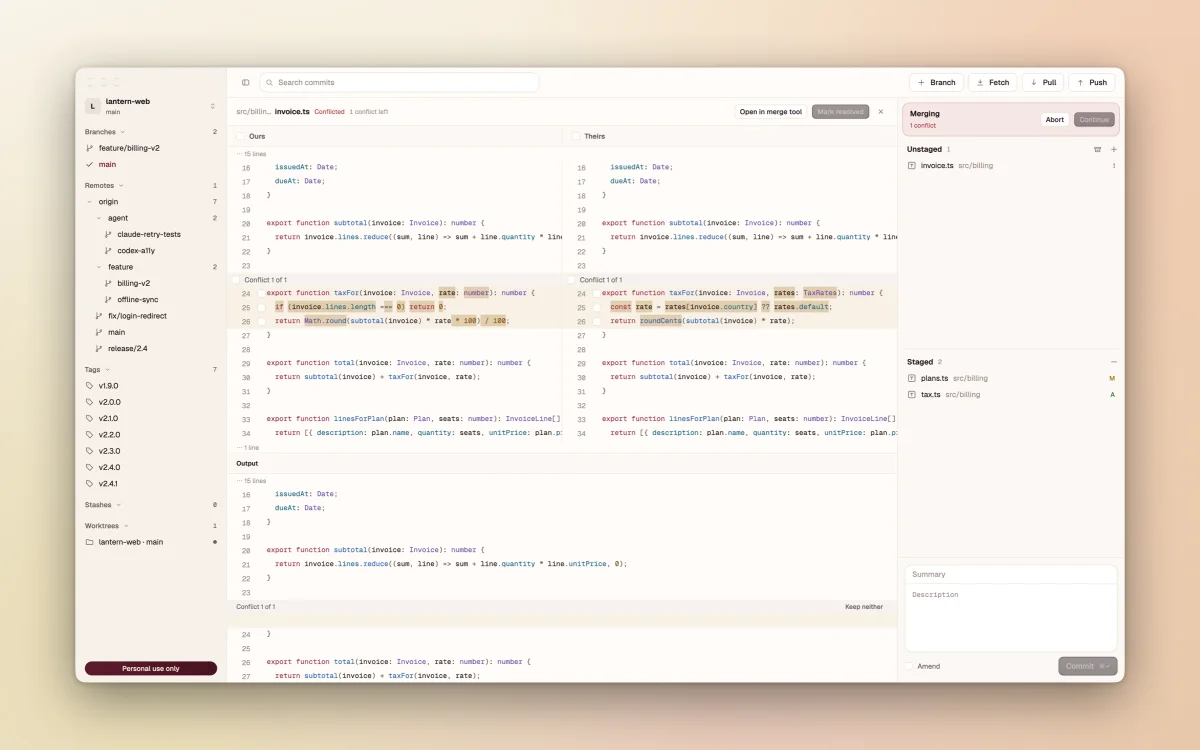
Both sides scroll together, with the result below. Pick hunks or single lines, or open the file in your own merge tool.
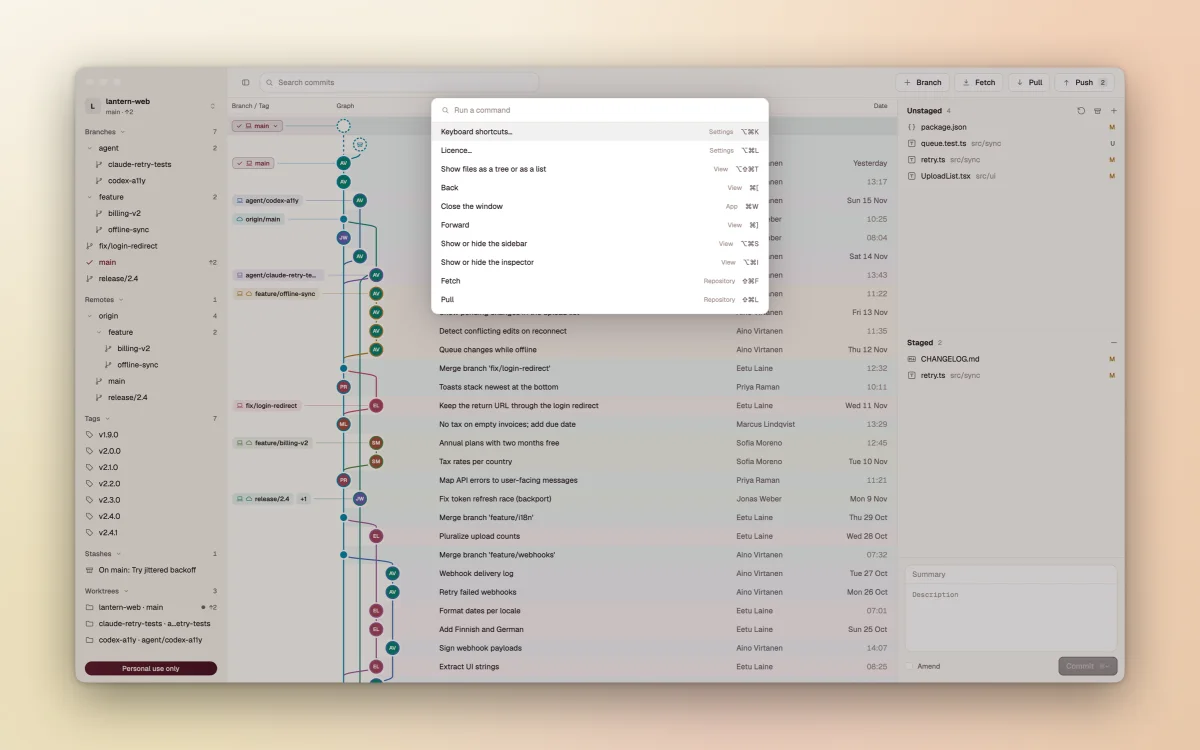
Commands, and actions for the selected commit or branch, are in the ⌘K palette, and every shortcut can be changed. A log lists each Git command Branchery has run.
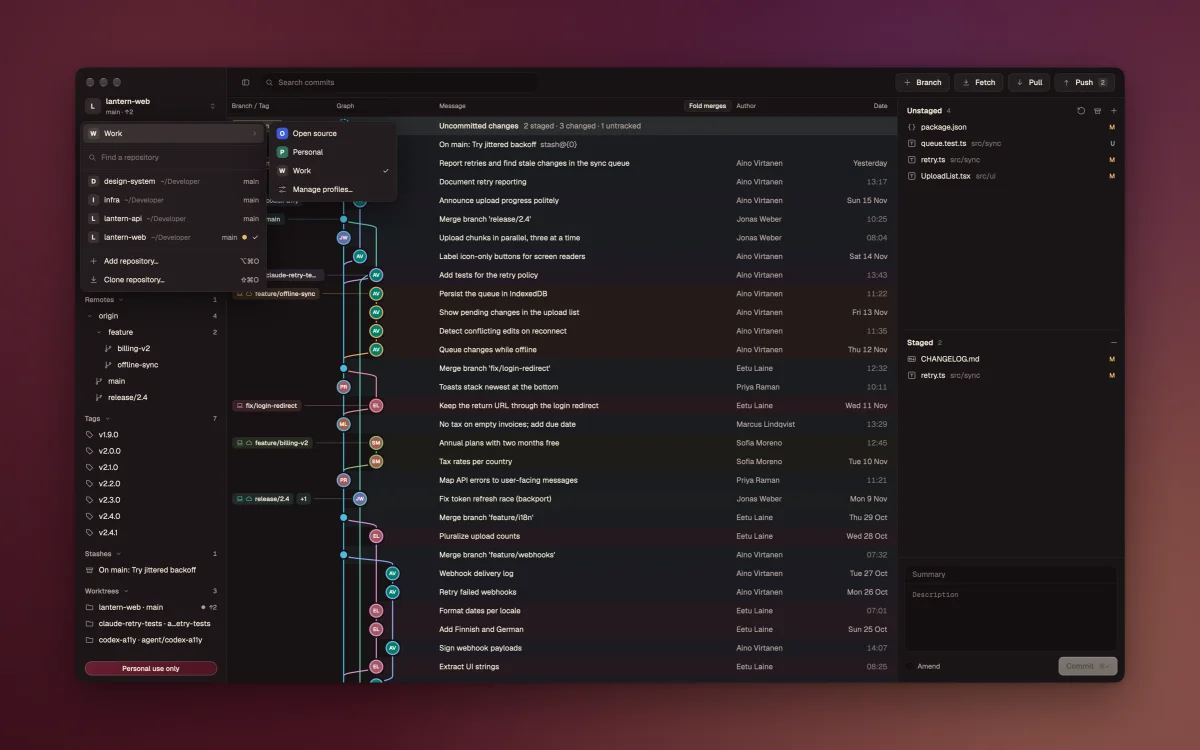
Keep work and personal repositories apart. Each profile has its own Git identity, which Branchery checks before every commit.
Many of us run coding agents on several branches at once. Branchery is made to keep up with that.
Worktrees are listed in the sidebar, where you can create, open and remove them.
The window stays responsive while other tools change hundreds of files a second.
⌘Z undoes the last operation, such as a commit, a reset or a merge.
Branchery is free for public repositories and repositories without a remote. Private repositories need a licence.
Private repositories
9,90 €per year
Branchery has no account, no telemetry and no analytics. Besides Git's own traffic, it checks for updates at most once a day (sending only its version number), asks our licence server about your trial (once a day while it runs) or your licence (on import, then once a week), and anonymously asks a repository's own host whether it is public, without your credentials. Licence-server requests carry a hash of your Mac's hardware id, never the id itself. Crash reports stay on your Mac unless you choose to email one to us. Everything works without a network connection.